
The Problem Isn't the Book. It’s Finding the Readers.
Let's Retire Retirement has been out for a year.
I'm proud of the book Sara Stibitz and I wrote.
And it has me rethinking how impact works in 2026.
We hit the USA Today Bestseller list and sold 7,690 copies across all formats in the first year.
Some of that was timing I couldn't control. A month after launch, I had an emergency appendectomy that pulled me into a few months of recovery. Not long after, I could feel the energy in CADRE trending down, partly because I'd been heads-down on the book for so long, so I had over 100 1:1 conversations with our members and cut our membership in half to fully support the people who were the best fit for our community.
Then Melanie's mother was diagnosed with cancer, and my boys and I went all-in supporting our queen. Then her closest childhood friend passed away, tragically and suddenly.
It was a brutal eight months. We handled most of it in stride. There just wasn't much left over for book promo.
Here's the part worth your attention if you're considering writing a book in 2026.
The market for people who actually read books is small, and it's shrinking.
In 2025, 40% of American adults didn't read a single book.
27% read between one and four.
19% did 82% of the country's reading.
About half my sales were bulk orders by friends and colleagues buying copies to give away. Run those reading numbers against 4,000 bulk copies, and maybe 800 of them ever had a shot at being read.
I spent roughly $150,000 on the publisher, my writing partner, and marketing, plus hundreds of hours of my time. I never expected the book to turn a profit. I expected it to have a bigger impact.
So I've had to ask myself an uncomfortable question: would that time and money have done more somewhere else?
The honest answer is yes.
The average adult spends two hours and twenty-five minutes a day on social media. That's 16 hours a week and 882 hours a year.
Most people want short-form content right now, whether I like it or not (I don't). If I'd put that $150K and those hundreds of hours into short-form video and writing, the same ideas would be reaching more of the people who'll actually engage with them.
The book did exactly what I wanted it to do for the people who read it. I have over 160 Amazon reviews at 4.7 stars, and more than 100 readers have told me it changed something real for them.
That's what I'm solving for. My problem isn't the impact per reader.
It's the number of readers a book can ever reach when most people have stopped reading them.
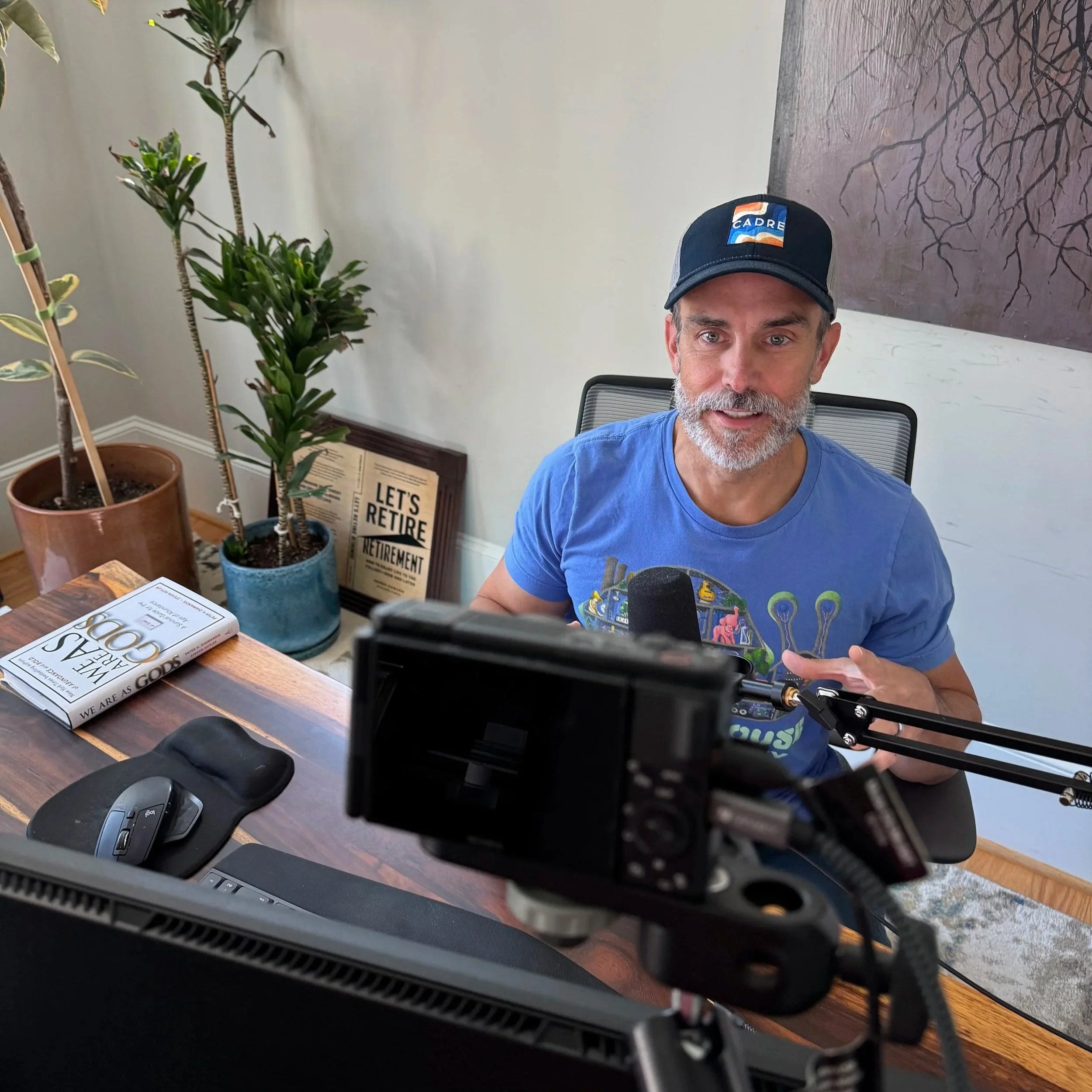
I used to think the real depth lived in the book, and short-form video was just a teaser to get people to read it. I don't believe that anymore.
The videos I'm making expand on the same ideas, and for the people who'll never open a book, they aren't a lighter version of the message—they're the whole version. Short-form doesn't just widen the funnel. For many, it's where the depth actually lands.
I've been changing how I spend my time, and I'm not going to play the games required to chase a sales number for its own sake.
Selling a book and getting a book into the hands of someone who'll actually read it are two very different things, and I'm only interested in the second one.
The book will be available for those who prefer to read, and I’ll continue writing articles for those who prefer that.
I am also going to reallocate more of my time and resources to meet the majority where they are.
When I meet someone who seems interested in the book, I ask if they'll read it before I give it to them. Once I give them an out and assure them they won't hurt my feelings if they say no, almost all of them admit they probably won't read it. I usually send them a few of my videos instead.
One caveat to mention is that for many authors, a book isn't the product; it's the door-opener to speaking, coaching, or a program that costs far more than the book. For them, a few thousand of the right readers can be a huge win. That's not my situation. I'm not selling a course or chasing the next keynote.
The book was the thing itself, which is exactly why "did anyone actually read it?" is the only question I care about.
I still believe this book will have its day. There's a huge market for readers who don't yet know it exists. It's an evergreen book that should be as useful to the right person in five years as it is today. Sometimes it only takes the right one or two people to read it, love it, and pass it on. I believe they're out there.
I slowed down after selling my wealth management practice in 2022, and I wrote the book because it felt like the path God wanted me on.
Last week, I got in my feelings about not being where I thought I'd be, and I asked for a sign about whether to stay the course.
That afternoon, out of nowhere, I got an email from the host of a top-1% podcast who'd read the book and wanted me on the show.
I got the answer I needed.
I've never felt more creative than I do right now. I wake up most days genuinely inspired, and the writing and the videos are landing with people in a way that tells me I'm not done.
So I'll keep showing up and adding value where I can. Some of that will probably sell books. Most of it won't be about books at all. And right now, the thing I'm least willing to defer is the time in front of me with my boys.
If you're sitting on a book you feel called to write, write it. Just go in clear-eyed about what it can and can't do.
